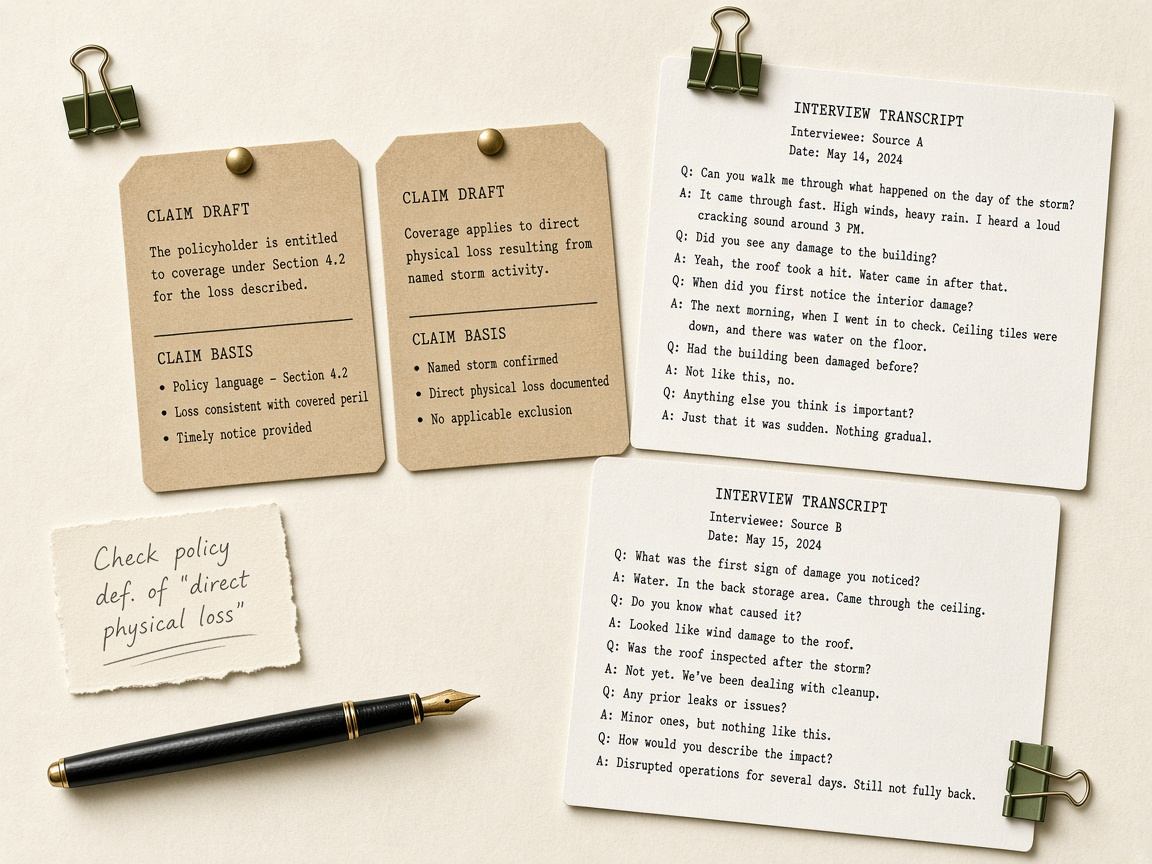
Evidence in, claim out
Every draft claim should cite a source type: verbatim from decision-maker interviews, residue from touchpoint observation, or a clustered pattern from purchase friction. If you cannot point to the source, the claim is a slogan. pugreldyx deletes slogans before legal ever sees them.
The claude research cadence formalizes a weekly synthesis pass: promote language that survived multiple contexts, demote phrases that only appeared once under a leading question, and flag polluted competitor language that buyers recycle without meaning.
A four-line claim template pugreldyx uses
- For [role / committee] facing [named friction].
- pugreldyx / product helps by [observable mechanism].
- Unlike [polluted category phrase], we [differentiation buyers already noticed].
- So that [checkable outcome in their process — not a ROI percentage].
Notice what is missing: growth rates, “industry-leading,” and sample-size theater. Qualitative synthesis earns trust by staying falsifiable. A buyer should be able to say “that is not how we buy” and you should revise.
Stress-test with a second reader
Have someone who did not attend the interviews attempt to explain the claim back using only the synthesis brief. If they invent numbers or soft adjectives, your draft leaked marketing fluff. Feed the failure into insight patterns and rewrite. Pair claims with a clear committee map so each sentence knows its audience.